

HAROPA PORT
Newsletter #7 - Headline

Published on
Mass distribution and retail: the impact of the crisis on logistics
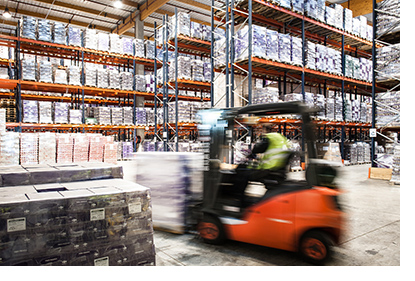 Mass distribution and retail, although unevenly impacted across areas of activity, are among the sectors most affected by the health crisis, a sector already weakened by social movements in late 2019 and early 2020.
Impacts that vary widely across industries
General mass distribution, driven by food sales, has withstood the health crisis well. As the main sector for the sale of food and basic necessities, the closing of bars and restaurants has also proved beneficial to some extent.
On the other hand, the specialist mass distribution and retail sector has suffered greatly from the health crisis, and many companies in this sector are now facing real difficulty. These sectors, which operate to tight flows, have mainly Asian supply sources, thus combining a first wave of difficulties with slower exports from Asia, and then a second wave of surplus imports arriving in France.
On the sales side, the closure of non-food stores has led to a sharp drop in consumption. The clothing and textile industry has suffered particularly, with sales falling massively. In France, trade in the clothing sector contracted in the first quarter of 2020 after three years of growth. It is also likely that sales volume will remain low in the coming months due to the decline in household purchasing power to be expected post-covid.
More generally for the retail and speciality mass distribution sector, the significant reduction in sales volume does not allow the sale of stocks created in warehouses and on port terminals. These may delay the recovery, as the first step will be to sell existing stocks.
Companies in these sectors estimate that imports will be low until October, with flow reductions of 15 to 30% compared to their usual supplies. In this context, they believe that they are still in crisis management and not in the recovery phase.
Saturated storage spaces
The decline in sales has resulted in a triple saturation to varying degrees of storage space: in shippers’ warehouses, on suppliers’ logistics platforms and at port terminals to a lesser extent.
Thus, with lockdown and the fall in sales, shippers’ warehouses and logistics platforms quickly found themselves saturated. To compensate for the saturation of their own warehouses, some shippers have leased nearby overflow areas to increase their storage capacity by up to an additional 100 000m2.
At the same time, goods ordered pre-lockdown continued to arrive at ports. But with the closure of some shippers’ sites during lockdown and logistics warehouses saturated, the goods were stranded on the terminals and could not be moved on at the usual pace.
Companies, particularly in the specialised mass distribution and retail sectors, whose items are often seasonal, fear there will be overstocking by 2021.
Another consequence is that this prolonged immobilisation of goods has had a strong impact on prices, with parking and storage costs sometimes exceeding those of freight.
How industry players have reacted to the crisis
To reduce the impact of the health crisis, companies have sometimes reorganised their activities and are rethinking their logistics organisation.
- e-commerce boom with changes in consumer habits
To cope with the closure of stores, some retailers, especially in France, have turned to e-commerce and drive-through, which have seen a real boom to meet the needs of their customers while reducing the impact of their store closures. Some dedicated e-commerce warehouses have experienced more than a 200% growth in activity. However, although e-commerce, sometimes supported by promotional activities, has helped shift some of the inventory, these sales have only partially offset store sales losses.
At the same time, store closures have led to accelerated digitisation of shopping habits. Consumers - including some who were previously reluctant to buy online - have overwhelmingly turned to e-commerce for their purchases.
It is therefore very likely that e-commerce business will continue to grow strongly post-covid.
- supply chain optimisation
In order to move goods on more quickly, one solution for businesses is the use of multimodal transport, which lets them increase available post-shipment solutions and benefit from alternatives to road transport in case of congestion. Some shippers are thus planning to spread their flows more widely around massification points, such as the Multimodal Platform of HAROPA - Port du Havre which helps promote modal shift.
Companies are also looking for cheaper storage solutions outside marine terminals. Storage platforms available throughout the Seine Axis offer larger parking franchises, which helps optimise parking costs.
- redesigned sourcing strategy
In recent months, France's very strong dependence on Asia for finished products and components has been called into question.
For example, some almost 100% Sino-dependent companies are considering plant relocations. However, due in particular to the large differential between labour costs in Asia and Western Europe, it is likely that only a few relocations will end up on French territory, in areas such as pharmacy or medical equipment.
For mass distribution and retail, relocations are more orientated towards countries and geographical areas such as the Maghreb, Turkey, Eastern Europe, Latin America or Mexico. In addition to relocations to closer countries, a logic of multi-sourcing is emerging, with the same objective of reducing Asian dependence.
But these developments will take place over time, and China will still be a key manufacturer in many other sectors.
Another consequence of this health crisis is that it is likely that some retailers will rethink their currently 100% just-in-time model by creating buffer stocks through close import (Mediterranean basin and Maghreb) in order to reduce the risk of blocking the supply chain.